

Animal Kennel Size & Requirements (Your 2026 Guide)
- Dec 19, 2025
- 3 min read
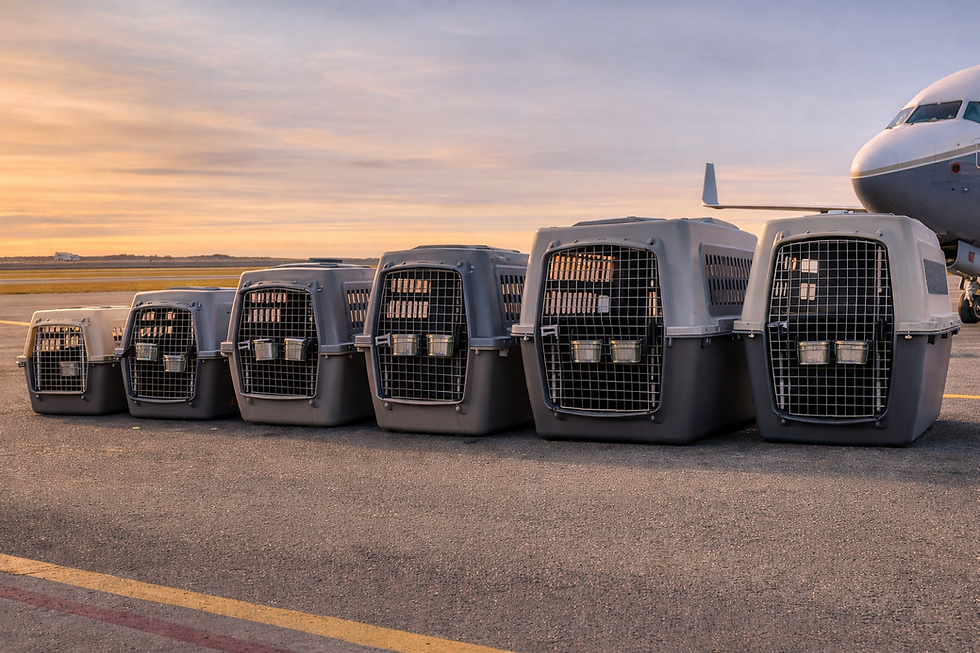
Selecting the correct kennel size is one of the most important steps when planning domestic pet air travel. Airlines and cargo handlers require kennels that meet specific size, weight, and construction standards to ensure pet safety, comfort, and compliance during flight.
Whether your dog is traveling in cargo, as checked baggage, or with a professional pet escort, proper kennel selection can prevent delays, denied boarding, and unnecessary stress.
Why Kennel Size Is Critical for Pet Air Travel
Airlines require that pets be transported in kennels that allow them to:
Stand upright without ears or head touching the top
Turn around freely inside the kennel
Lie down comfortably in a natural position
Kennels that are too small may result in refusal at check-in or create safety concerns during transport. Correct sizing is a regulatory and welfare requirement, not a personal preference.
Standard Airline-Approved Kennel Sizes for Dogs
Most domestic airlines accept hard-sided kennels that fall into standardized size ranges. The following sizes are commonly used for dog air travel:
Choosing a kennel slightly larger than the minimum requirement—while staying within aircraft limits—improves comfort and compliance.
Aircraft Size Limits and Weight Restrictions
Aircraft type directly affects kennel acceptance. Many domestic flights operate on regional or narrow-body aircraft with limited cargo space.
Common limitations include:
Maximum kennel dimensions near 40 × 27 × 30 inches
Combined pet and kennel weight limits of approximately 150 pounds
Larger kennels are typically accepted only on mainline aircraft. Confirming the aircraft type before booking pet travel is essential.
Kennel Construction Requirements for Domestic Flights
In addition to size, kennel construction must meet airline safety standards. Accepted kennels generally include:
Hard-sided plastic or similarly rigid material
Metal bolts or fasteners securing the top and bottom
Ventilation on at least three sides
Food and water bowls attached inside the kennel
Clear “Live Animal” labeling
Soft-sided carriers, collapsible crates, wire-top kennels, and kennels with wheels attached are usually not accepted for cargo or checked baggage travel.
How to Measure Your Dog for Air Travel Kennel Size
Proper measurement ensures airline compliance and pet comfort:
Measure from the tip of the nose to the base of the tail
Measure from the floor to the top of the shoulders or ears, whichever is higher
Add several inches to both measurements to allow natural movement
The dog should be able to stand, turn around, and lie down without restriction inside the kennel.
Domestic Pet Travel Documentation Requirements
Even for travel within the United States, most airlines and transport providers require:
A valid domestic health certificate (Certificate of Veterinary Inspection)
Proof of current rabies vaccination when applicable
Advance confirmation of kennel size and travel method
Incomplete documentation is a leading cause of pet travel delays and cancellations.
Best Practices for Domestic Pet Air Travel
Select the kennel early to avoid last-minute size issues
Confirm aircraft type and cargo limits before booking
Ensure all kennel hardware is secure and compliant
Keep documentation current and accessible on travel day
Planning ahead reduces risk and creates a smoother experience for pets and owners alike.
Final Thoughts
Domestic pet air travel begins with proper preparation. Choosing the correct kennel size, understanding aircraft limitations, and meeting construction and documentation requirements are essential for safe and compliant travel.
A well-chosen kennel supports your pet’s comfort, minimizes travel disruptions, and ensures a successful domestic flight experience.
"This post contains affiliate links. If you make a purchase, I may earn a small commission at no extra cost to you


Comments